4 min read
Anthropic Built Its Own Version Control. It's Not the First.
- #git
- #version-control
- #history
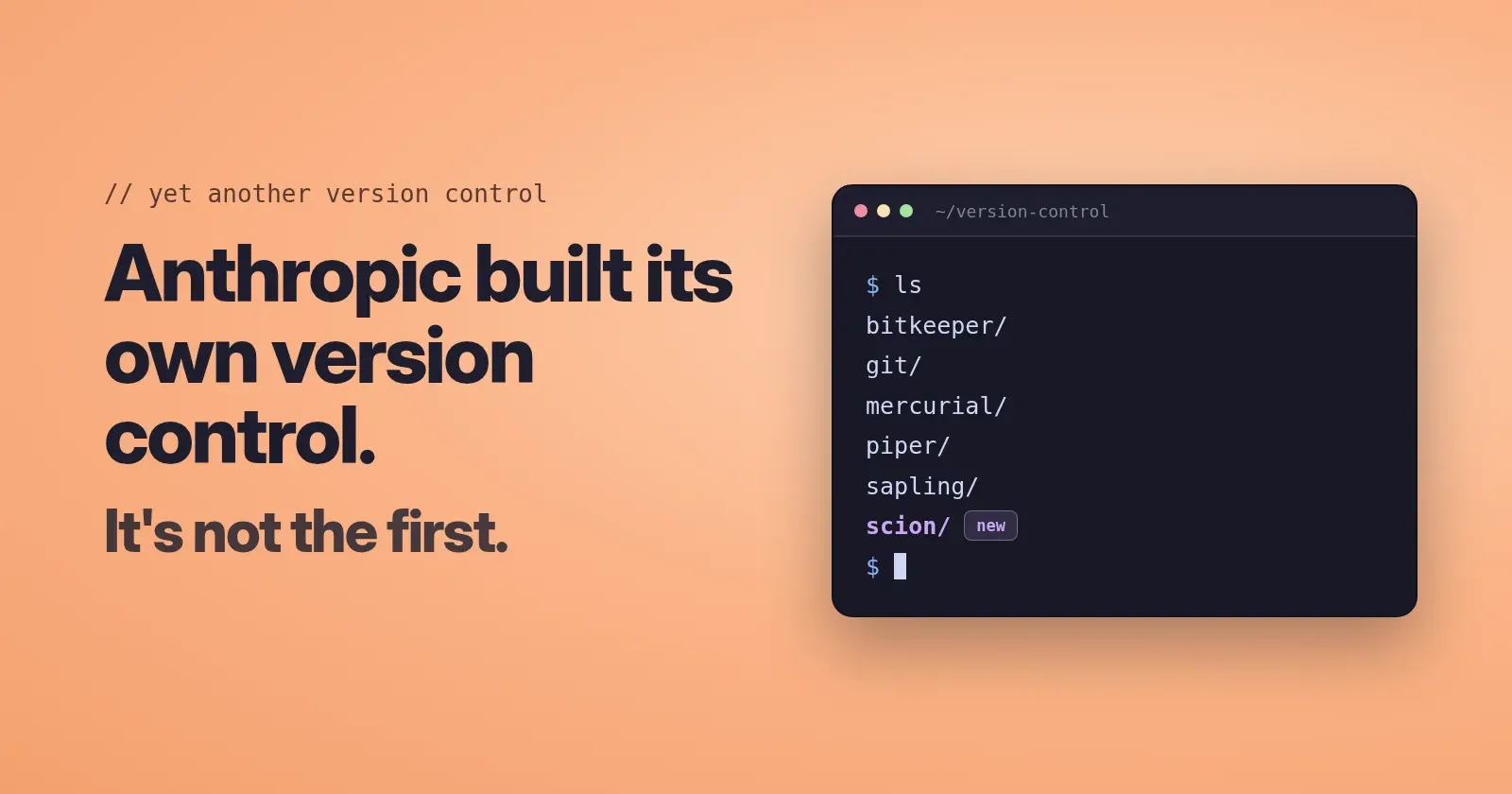
Last week, Anthropic wrote about how they replaced Git with their own version control (opens in a new tab) for their monorepo. They call it Scion.
But this isn’t the first time someone has built their own version control. Even Git (opens in a new tab), the one almost everyone uses, was built this way.
Why Scion?
Most of the work in Anthropic’s monorepo now comes from agents and CI jobs, not people. By September 2026, they were merging over 30,000 changes a day, and Git, which is built for distributed and offline work, started to struggle. Scion assumes clients are always online, so the server does the heavy work, and you don’t need a full copy of the repo on your machine.
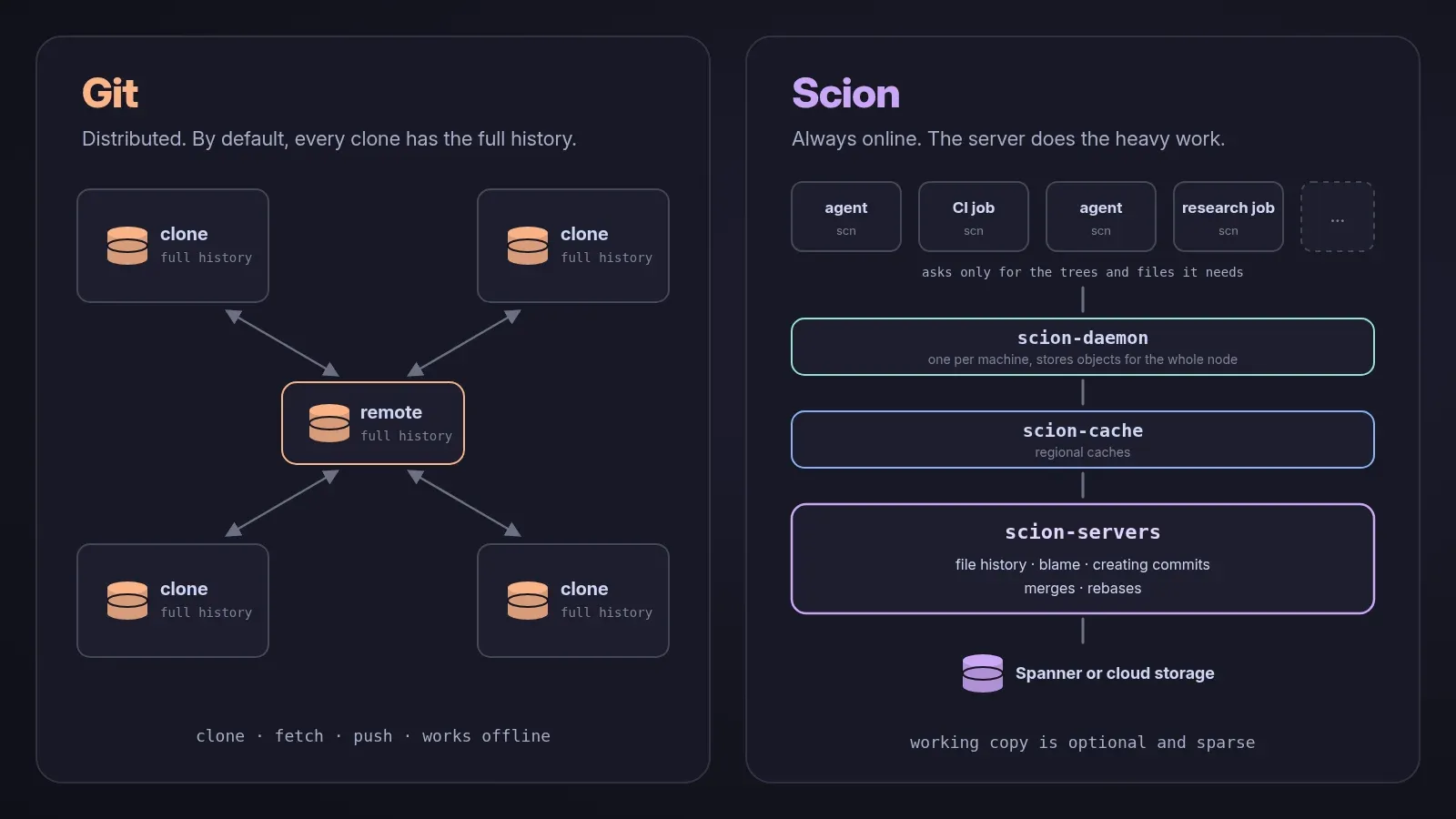
As far as I know, Scion isn’t open source, at least not yet. The post itself says it’s “by no means a suitable replacement for git for general use”.
Git was born the same way
From 2002, the Linux kernel (opens in a new tab) was developed using BitKeeper (opens in a new tab), a proprietary version control system. In 2005, the company behind it withdrew the free version (opens in a new tab) the kernel developers were using. So Linus Torvalds (opens in a new tab) wrote his own: Git.
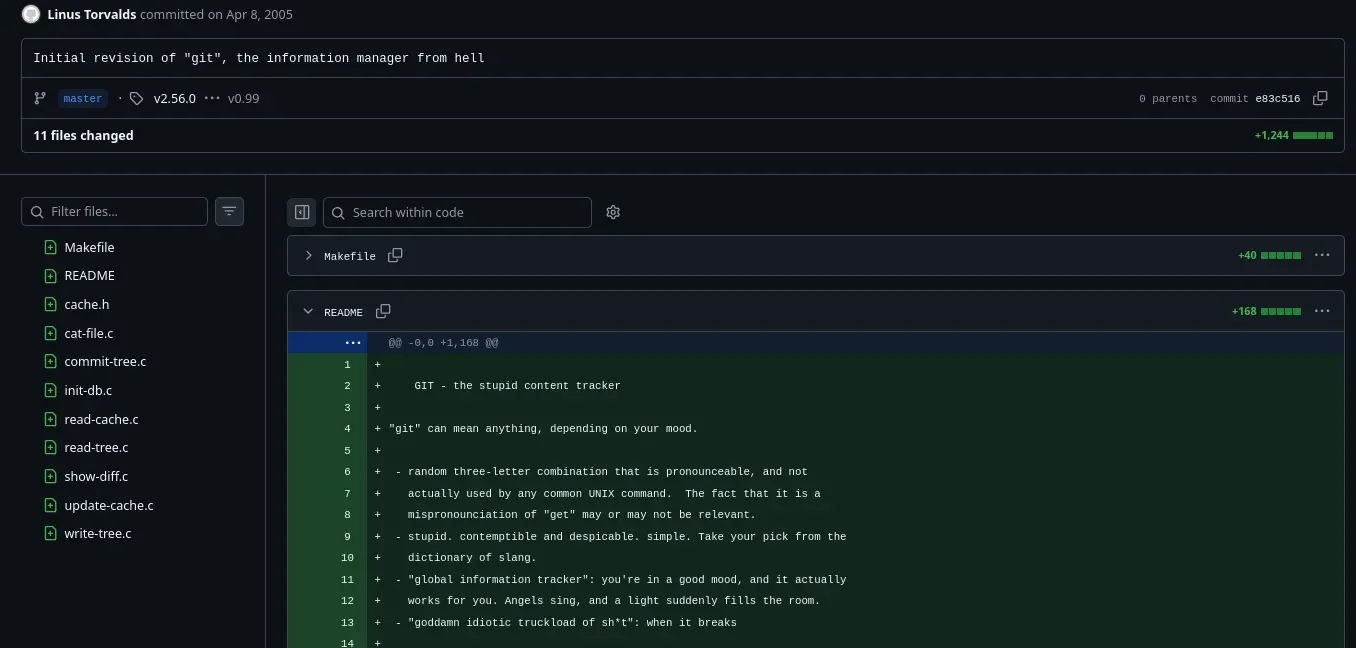
The first commit (opens in a new tab) was made on 7 April 2005, UTC. GitHub shows dates in your own time zone, so it may show 8 April for you.
Fun fact: Linus doesn’t maintain Git. He handed it over to Junio C Hamano (opens in a new tab) in July 2005, and Junio has maintained it ever since. Google’s open source blog profiled him in 2011 (opens in a new tab) as a Google engineer working on Git.
Mercurial
Git isn’t the only one that came out of this. Mercurial (opens in a new tab) (hg) was created the same month, for the same reason. Git became far more popular, but Mercurial is still around.
Mozilla (opens in a new tab) used it for Firefox (opens in a new tab) for years. They only moved Firefox to Git, hosted on GitHub (opens in a new tab), in April 2025, even though Git had been around for 20 years by then.
Meta’s Sapling
A while back, I found out that Facebook (now Meta) keeps almost all of its code in one huge monorepo, and that’s how I learned about Sapling (opens in a new tab). They first scaled Mercurial (opens in a new tab) to handle it, and over the years that work became Sapling, which they open-sourced in 2022 (opens in a new tab). It works with Git repos too.
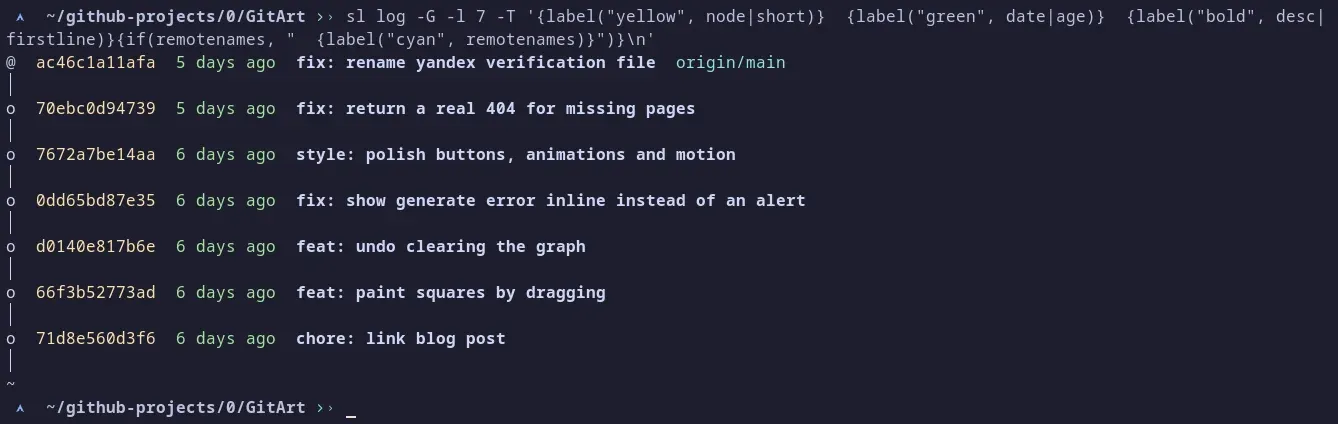
Anthropic’s post actually names Sapling as prior art, and says Sapling’s server, Mononoke, pioneered many of the techniques Scion uses.
Google’s Piper
I also knew Google has its own version control. It’s called Piper, and they built it when their monorepo outgrew Perforce. Their 2016 paper (opens in a new tab) says that in January 2015, the repo already had about two billion lines of code. Piper isn’t open source either.
So, not the first
Linus did it in 2005, Meta and Google did it for their monorepos, and now Anthropic has done it for a repo that’s mostly used by agents. Git has been good enough for almost everyone else for 20 years, and Anthropic says themselves that Scion isn’t meant to replace it for the rest of us.
References
- Redesigning source control at Anthropic (opens in a new tab), Anthropic Engineering
- The kernel and BitKeeper part ways (opens in a new tab), LWN.net
- The first commit of Git (opens in a new tab), GitHub
- Celebrating 15 years of Git: An interview with Git maintainer Junio Hamano (opens in a new tab), GitHub Blog
- Geek Time with Junio C Hamano (opens in a new tab), Google Open Source Blog
- Mercurial (opens in a new tab), Wikipedia
- Engineering Effectiveness Newsletter (Q2 2025 Edition) (opens in a new tab), Mozilla dev-platform
- Scaling Mercurial at Facebook (opens in a new tab), Engineering at Meta
- Sapling: Source control that’s user-friendly and scalable (opens in a new tab), Engineering at Meta
- Why Google Stores Billions of Lines of Code in a Single Repository (opens in a new tab), Google Research